
How to Work Out Your Freelance Day Rate in the UK
A UK sole trader's day rate from the income you want to keep: bank holidays, billable days, Income Tax and Class 4 National Insurance, VAT and Making Tax Digital.
By Redbison Dev · · 10 min read
United Kingdom edition. Worked in pounds for UK sole traders: 2026 to 2027 Income Tax bands and Class 4 National Insurance outside Scotland, bank holidays by nation, the £90,000 VAT threshold, Making Tax Digital for Income Tax and where IR35 changes the sum. US edition
To keep £35,000 a year as a UK sole trader in the 2026 to 2027 tax year, outside Scotland, with £4,000 of business costs, a 5% buffer, the usual holidays and 65% of a 7.5 hour day billed, you need about £44.60 an hour, or a day rate of £335 (quote £350). That is more than twice what £35,000 divided by your working hours suggests, because those hours also have to pay your Income Tax, National Insurance, costs and every day you are not billing. The Freelance Day Rate Calculator (UK) does the sum with your figures; this guide walks through each input as it applies in the UK.
This is general information for sole traders, not tax advice. If you work through a limited company, have other income, live in Scotland or are close to a threshold, an accountant can set your figures.
Step 1: the days you can actually work
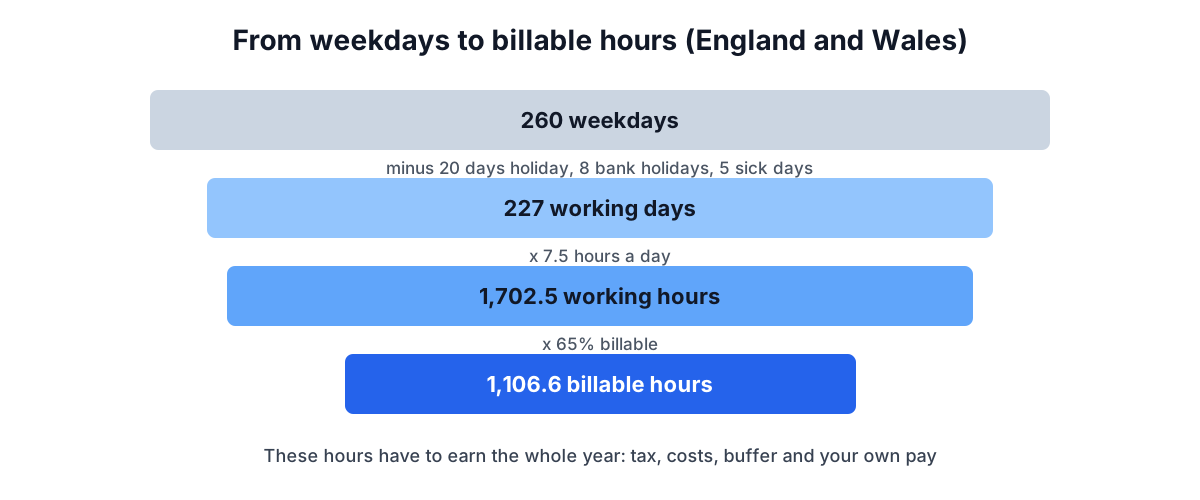
Five days a week gives 260 weekdays. An employee would be paid for some of the days you lose; you are not.
- Holiday. Most employees on a five-day week must get at least 28 days of paid leave, which GOV.UK notes can include bank holidays. A freelancer who takes 20 days plus the bank holidays is taking about the same.
- Bank holidays. England and Wales have 8 in 2027, Scotland 9 and Northern Ireland 10, according to the GOV.UK bank holiday list. Count the ones your clients close for.
- Sickness. You get no sick pay from a client. Allow about five days.
20 + 8 + 5 days off leaves 227 working days. At 7.5 hours a day, that is 1,702.5 hours.
Step 2: how much of that time you can bill
You will spend part of every month on things no client pays for: proposals, chasing invoices, bookkeeping, learning and the gaps between projects. The billable share is the most sensitive input in the sum.
| Billable share | Billable hours (227 days x 7.5 h) | Hourly rate for the £35,000 example | Day rate |
|---|---|---|---|
| 50% | 851 | £57.99 | £434.89 |
| 65% | 1,107 | £44.60 | £334.53 |
A first year with few clients often sits near the bottom of that range; a long contract through an agency can sit near the top. Be honest here: the difference between 50% and 65% is £100 a day.
Step 3: Income Tax and Class 4 National Insurance
As a sole trader you pay Income Tax and Class 4 National Insurance on your profit through Self Assessment. For the 2026 to 2027 tax year, outside Scotland:
- Income Tax (GOV.UK rates): a £12,570 Personal Allowance, 20% basic rate up to £50,270, 40% higher rate up to £125,140 and 45% above. The allowance shrinks by £1 for every £2 of income above £100,000 and is gone at £125,140.
- Class 4 National Insurance (GOV.UK rates): 6% on profits between £12,570 and £50,270 and 2% above. With profits of £7,105 or more, Class 2 is treated as paid, so you do not pay it.
The calculator needs your effective rate: total tax divided by profit. Below £50,270 every extra pound of profit loses 26p (20% tax plus 6% Class 4); above it, 42p. Working back from the take-home you want:
| Keep after tax | Profit needed | Income Tax | Class 4 | Effective rate to enter |
|---|---|---|---|---|
| £35,000 | £42,881 | £6,062 | £1,819 | 18.4% |
| £45,000 | £58,084 | £10,666 | £2,418 | 22.5% |
| £55,000 | £75,325 | £17,562 | £2,763 | 27.0% |
Entering your top rate (42%) instead would overprice you badly; entering 0% because "the accountant handles it" would leave the tax bill unpaid. Scotland has its own Income Tax bands, so a Scottish freelancer's effective rate differs.
Step 4: costs and a buffer
List what an employer used to pay for and now you do: equipment and software, professional indemnity insurance, an accountant, phone and broadband, training, travel to clients, and the pension contributions you mean to make. A sole trader gets no employer pension contribution, so if you want one, it is a cost.
The buffer covers slow months and late payers. The calculator grosses it up the same way as tax: revenue = (profit + costs) / (1 - buffer).
The £35,000 example, in full
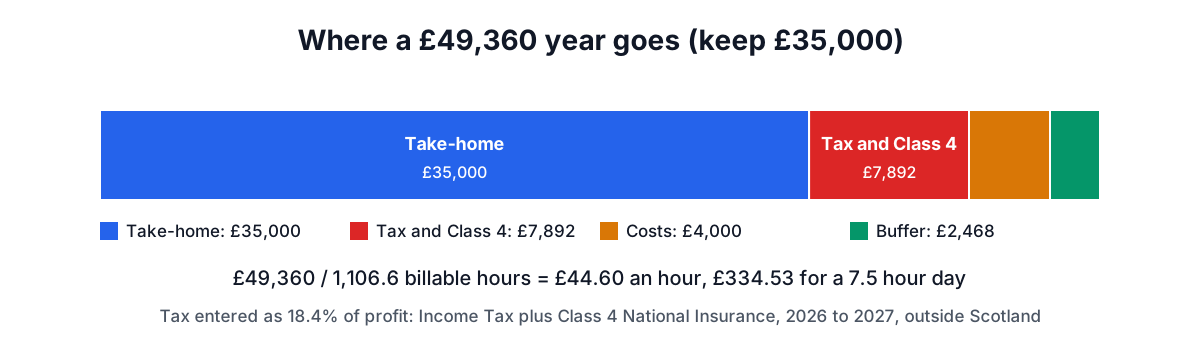
Take-home £35,000; costs £4,000; tax 18.4%; buffer 5%; 5 days a week, 7.5 hours a day; 20 days of holiday, 8 bank holidays, 5 sick days; 65% billable.
- Working days: 260 - 33 = 227; working hours 1,702.5; billable hours 1,106.6.
- Profit before tax: £35,000 / 0.816 = £42,892 (the rounded 18.4% gives a few pounds more than the exact £42,881).
- Revenue: (£42,892 + £4,000) / 0.95 = £49,360.
- Hourly rate: £49,360 / 1,106.6 = £44.60; day rate at 7.5 hours £334.53, quoted as £350.
The salary comparison shows why the naive method fails: £35,000 / 1,702.5 working hours is £20.56 an hour, less than half the £44.60 needed. The floor rate, costs divided by billable hours, is £3.61 an hour: below that every hour loses money before you are paid anything.
To keep £55,000 instead, with £6,000 of costs and the 27% effective rate from the table, the calculator gives £77.37 an hour and a £580.30 day rate on £85,624 of revenue.
Thresholds that change the sum
VAT. You must register when your taxable turnover over the last 12 months goes over £90,000, or you expect it to in the next 30 days (GOV.UK). VAT is added on top of your rate, so it does not change the rate itself, but for clients who cannot reclaim VAT it is a price rise. The £55,000 example's £85,624 of revenue is close to the line.
Making Tax Digital for Income Tax. Sole traders whose qualifying income was over £50,000 in the 2024 to 2025 tax year should have started using it from 6 April 2026; over £30,000 in 2025 to 2026 means starting from 6 April 2027, and over £20,000 in 2026 to 2027 from 6 April 2028 (HMRC). Budget for compatible software in your costs.
The trading allowance. The first £1,000 of trading income is tax free, and you can deduct the £1,000 allowance instead of your actual costs (HMRC). It matters for a side income, rarely for a full-time freelancer whose costs are higher.
IR35. If you contract through your own limited company, the off-payroll working rules can mean paying broadly the same Income Tax and National Insurance as an employee would on that engagement. The sole trader tax figures above do not apply to that set-up; work out the rate with an accountant.
Day rates in practice
UK clients and agencies often talk in day rates. Agree what a day is (7, 7.5 or 8 hours) and set the calculator to match, because a £350 day at 7 hours is a higher hourly rate than at 8. Offer a lower rate for a block of days or a monthly retainer, which cuts your selling time, and a higher one for single days that are hard to fill around. Review the rate each April when the new tax year's figures arrive.
Frequently asked questions
What day rate should I charge as a freelancer in the UK?
Work back from what you want to keep. To keep £35,000 in the 2026 to 2027 tax year, outside Scotland, with £4,000 of costs, a 5% buffer and 65% of a 7.5 hour day billed, the rate is about £335 a day. To keep £55,000 with £6,000 of costs it is about £580.
What tax rate should a sole trader put in a rate calculator?
The effective rate: Income Tax plus Class 4 National Insurance divided by profit. For 2026 to 2027 outside Scotland that is about 18.4% on £42,881 of profit, 22.5% on £58,084 and 27% on £75,325.
How many working days are there in a year for a freelancer?
260 weekdays less holiday, bank holidays and sick days. With 20 days of holiday, the 8 bank holidays in England and Wales and 5 sick days, that is 227 days, or 1,702.5 hours at 7.5 hours a day.
Do I add VAT to my day rate?
Only once you are VAT registered. Registration is required when taxable turnover over the last 12 months passes £90,000, and VAT is then charged on top of the rate.
Sources and further reading
- Income Tax rates and Personal Allowances, GOV.UK. Bands for the 2026 to 2027 tax year and the Personal Allowance taper.
- Self-employed National Insurance rates, GOV.UK. Class 4 rates and the Class 2 threshold for 2026 to 2027.
- UK bank holidays, GOV.UK.
- Holiday entitlement, GOV.UK. The 28-day statutory minimum for employees.
- VAT registration: when to register, GOV.UK.
- Check if you need to use Making Tax Digital for Income Tax, HMRC.
- Tax-free allowances on property and trading income, HMRC.
- Understanding off-payroll working (IR35), HMRC.
Open the Freelance Hourly Rate Calculator
More Business Calculators
Every tool in the Business Calculators section, free and in your browser.