
How Much Does a Meeting Cost a UK Employer?
Work out a meeting's cost in pounds from salaries, employer National Insurance and pension on-costs, a 37.5-hour week and 5.6 weeks of holiday, per year.
By Redbison Dev · · 9 min read
United Kingdom edition. UK edition in pounds, with on-costs from 2026 to 2027 employer National Insurance (15% above £5,000), the 3% auto-enrolment minimum, the Employment Allowance for small firms, 1,950 paid hours a year and 46 meeting weeks after statutory holiday. US edition
A one-hour weekly leadership meeting of a managing director on £110,000 and five heads of department on £58,000 costs the employer £237.95 each time, or about £4 a minute. Over the 46 weeks a year it actually runs, that is £10,945.64 and 276 person-hours. On salary alone the same meeting looks like £205.13; the difference is employer National Insurance and the workplace pension, which a UK employer pays on top of every salary.
This edition works through those figures with the Meeting Cost Calculator using UK rules for the 2026 to 2027 tax year: what to add to pay, how many hours a salary buys, and how many weeks a recurring meeting really runs.
From salary to an hourly cost
Divide the salary by the paid hours in a year. A common UK full-time contract is 37.5 hours a week, so:
37.5 hours x 52 weeks = 1,950 paid hours
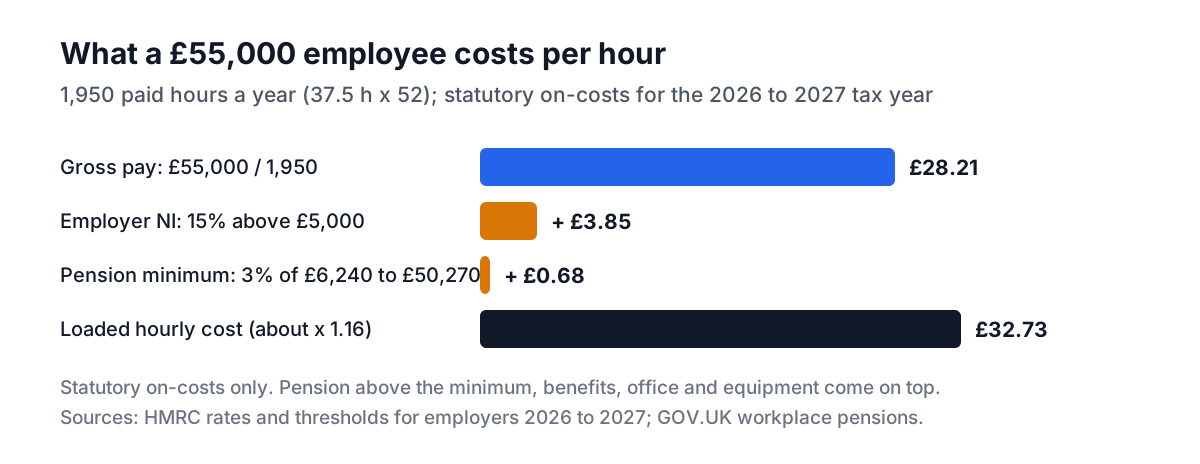
£55,000 / 1,950 = £28.21 an hour
Holidays and bank holidays are paid, so they stay in the 1,950. That is the right base for "what does an hour of this person cost", even though they do not work every one of those hours. If your contracts are 35 or 40 hours, change the paid hours to 1,820 or 2,080.
The on-costs every employer pays
Two costs come with every salary by law. HMRC's rates and thresholds for employers 2026 to 2027 set employer (secondary) Class 1 National Insurance at 15% on earnings above the secondary threshold of £5,000 a year. Under automatic enrolment, the workplace pension minimum is 3% from the employer, on qualifying earnings between £6,240 and £50,270.
For a £55,000 salary:
employer NI = 15% x (55,000 - 5,000)    = £7,500
pension     = 3% x (50,270 - 6,240)     = £1,320.90
on-cost     = 8,820.90 / 55,000         = 16.0%
The share is not the same at every salary:
| Salary | Employer NI | Pension minimum | On-cost |
|---|---|---|---|
| £28,000 | £3,450 | £652.80 | 14.7% |
| £38,000 | £4,950 | £952.80 | 15.5% |
| £55,000 | £7,500 | £1,320.90 | 16.0% |
| £95,000 | £13,500 | £1,320.90 | 15.6% |
NI grows with pay while the pension minimum stops at £50,270, so the on-cost peaks around the top of the qualifying band and then eases. That is why the calculator's UK version starts at a 1.16 multiplier. It is a floor: if you pay more than the minimum pension, offer private medical insurance or a car allowance, or want desks and laptops in the figure, raise it.
Small firms: the Employment Allowance changes the sum
Eligible employers can reduce their employer NI bill with the Employment Allowance, up to £10,500 for 2026 to 2027. For a small company with five staff on £30,000:
employer NI before the allowance = 5 x 15% x 25,000 = £18,750
after the allowance              = £8,250
pension minimum                  = 5 x 3% x 23,760  = £3,564
on-cost                          = 11,814 / 150,000 = 7.9%
A weekly one-hour team meeting of all five costs £83.08 at a 1.08 multiplier, against £88.46 at the 1.15 a larger firm would pay. Large employers have one more payroll cost: the Apprenticeship Levy at 0.5% of the pay bill, with a £15,000 allowance, so it only bites above a £3 million pay bill.
How many weeks a recurring meeting runs
Most full-time workers are entitled to 5.6 weeks of paid holiday, 28 days for a five-day week, and employers can include bank holidays in that. A weekly meeting that is cancelled or thinned out in those weeks runs about 46 times a year, not 52. The calculator uses 46 weeks for the yearly figure; use 52 only if the meeting happens whoever is away.
Worked examples
The weekly leadership meeting
| Who | Salary | Loaded hourly cost at 1.16 | Cost for 60 minutes |
|---|---|---|---|
| Managing director | £110,000 | £65.44 | £65.44 |
| 5 heads of department | £58,000 | £34.50 each | £172.51 |
| Total | £237.95 |
Yearly at 46 weeks: £10,945.64 and 276 person-hours. On pay alone the yearly figure is £9,435.90, so the on-costs add about £1,510 a year to one recurring slot.
The daily stand-up
Eight developers on £55,000 and a delivery lead on £60,000, 15 minutes, five days a week:
| Measure | Value |
|---|---|
| Cost per stand-up | £74.36 |
| Cost per minute | £4.96 |
| Person-hours per stand-up | 2.25 |
| Per year, 46 weeks | £17,102.56 and 517.5 person-hours |
A short daily meeting costs more over a year than the hour-long weekly one, because it happens five times as often with more people. Dropping it to three days a week saves about £6,840 a year; keeping it to 10 minutes saves about £5,700.
A minimum-wage workplace
At the National Living Wage of £12.71 an hour for workers aged 21 and over from 1 April 2026, enter pay as hourly. A full-time worker on that rate earns about £24,785 on 1,950 hours, and NI plus the pension minimum add about 14.2%. A 15-minute pre-shift briefing for twelve staff on that rate and a manager on £19 an hour runs to roughly £49 each time at 1.142.
Person-hours, not just pounds
The pound figure is useful for budgets, but person-hours are easier to argue about in a team. A 90-minute monthly all-hands for 60 people is 90 person-hours, more than two full working weeks of one person's time, every month. Show both numbers when you propose cutting a meeting; the hours land better with people who do not see salary data.
What the number leaves out
- Preparation and recovery. Reading the papers, travel between offices and the time it takes to get back into focused work are not in the figure.
- Opportunity cost. A billable consultant's hour may be worth several times their salary cost to the firm.
- Benefits and overheads beyond the statutory floor, unless you raise the multiplier.
Handling salary data
Salary information is personal data under UK GDPR. Use pay bands or role averages rather than named individuals' salaries when you share a meeting cost, and keep the detailed inputs to people who already see payroll. The calculator runs in your browser and does not send the figures anywhere.
Tools for this job
- Meeting Cost Calculator: cost per meeting, minute and year in pounds from salaries or hourly pay.
- Salary Calculator: turn an annual salary into hourly, weekly and monthly pay.
- Time Card Calculator: hours worked across a week.
- The US meeting cost guide uses US benefit and payroll tax figures.
Frequently asked questions
How much does a one-hour meeting cost in the UK?
Add up each attendee's salary divided by 1,950 paid hours, times about 1.16 for employer National Insurance and the pension minimum. Six people on an average of £66,700 cost about £238 for an hour. Your own figure depends on salaries, hours and benefits.
What are employer on-costs in the UK?
The statutory ones are employer National Insurance at 15% above £5,000 a year and at least 3% pension contributions on qualifying earnings between £6,240 and £50,270, for the 2026 to 2027 tax year. Together they add about 15% to 16% to the salaries in this guide's table. Benefits, office costs and the Apprenticeship Levy for large employers come on top.
How many working hours are in a year in the UK?
On a 37.5-hour contract, 1,950 paid hours a year (37.5 x 52). Holidays are paid, so they stay in that figure. After 5.6 weeks of statutory holiday, about 1,740 hours are actually worked.
Does a daily stand-up cost more than a weekly meeting?
Often. In the example, a 15-minute stand-up for nine people costs £74.36 each time but £17,102.56 a year, while a one-hour weekly meeting for six senior staff costs £10,945.64 a year.
Should I include the Employment Allowance?
If your business qualifies. It cuts the employer NI bill by up to £10,500 a year, which for a five-person firm on £30,000 salaries brings on-costs from about 15% down to about 8%.
Sources and further reading
- Rates and thresholds for employers 2026 to 2027, HMRC. Secondary threshold £5,000, employer rate 15%, Employment Allowance £10,500, Apprenticeship Levy and the National Living Wage.
- Workplace pensions: what you, your employer and the government pay, GOV.UK. 3% employer minimum and the £6,240 to £50,270 qualifying earnings band.
- Holiday entitlement, GOV.UK. 5.6 weeks of statutory paid holiday.
- Employment Allowance, GOV.UK. Eligible employers reduce their annual National Insurance liability by up to £10,500.
- Data protection, GOV.UK. How organisations must handle personal data under UK GDPR.
Open the Meeting Cost Calculator
More Team & Productivity
Every tool in the Team & Productivity section, free and in your browser.