
Overpaying Your Mortgage UK: How Much It Saves
What overpaying a UK mortgage saves on £250,000 at 4.63%: monthly and lump-sum overpayments, the 10% allowance, early repayment charges and offset mortgages.
By Redbison Dev · · 10 min read
United Kingdom edition. Written for UK borrowers: £ examples at the Bank of England's new-mortgage rate, the yearly overpayment allowance, early repayment charges, shorter term or lower payment, and offset mortgages. US edition
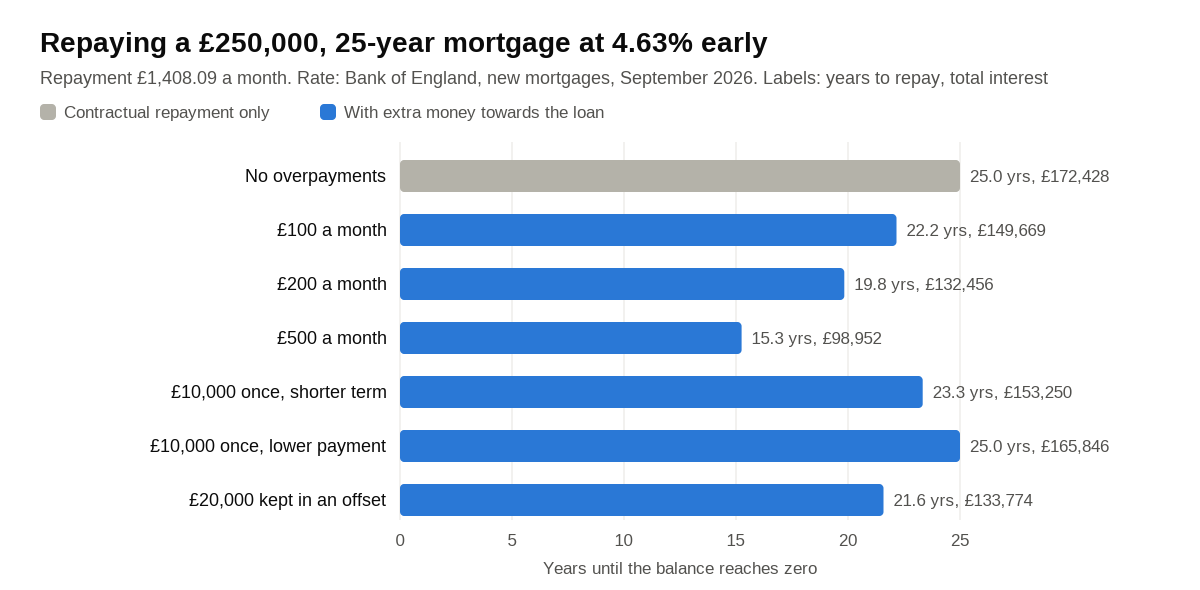
Most UK lenders let you pay more than your monthly repayment, and every pound overpaid stops being charged interest; Nationwide, which works out interest daily, says the saving starts the next day. On a £250,000 repayment mortgage over 25 years at 4.63%, overpaying £200 a month clears it 5 years and 2 months early and saves £39,972 of interest, if the rate held for the whole term. Two things decide whether you get that saving: staying inside your deal's overpayment allowance, so no early repayment charge (ERC) applies, and telling the lender to shorten the term rather than lower the payment.
The worked figures come from the UK Mortgage Repayment Calculator, so you can repeat them with your own balance, rate and term.
The example mortgage
The Bank of England's effective interest rate on newly drawn mortgages was 4.63% in September 2026 (published 29 October 2026). Take a £312,500 home bought with a 20% deposit, leaving a £250,000 mortgage over 25 years. In the calculator enter a property price of 312500, a deposit of 20%, a rate of 4.63 and a term of 25, with council tax and buildings insurance at 0.
- Monthly repayment: £1,408.09.
- Interest in the first month: £250,000 × 4.63% ÷ 12 = £964.58, so only £443.51 of the first repayment reduces the debt.
- Total interest over 25 years at 4.63%: £172,427.76.
Your rate will change when each fixed deal ends, so treat the long-run totals as a comparison at one rate. The figures you can bank on are the shorter ones: the balance when your fix ends and the interest you stop paying during it.
What regular and one-off overpayments save
Put the amount in Overpayment every month, or a lump sum in One-time payment with With payment number set to the repayment it goes in with:
| £250,000 over 25 years at 4.63% | Repaid after | Total interest | Interest saved | Time saved |
|---|---|---|---|---|
| No overpayments | 300 months | £172,427.76 | none | none |
| £100 a month | 266 months | £149,669.39 | £22,758.37 | 2 years 10 months |
| £200 a month | 238 months | £132,455.57 | £39,972.18 | 5 years 2 months |
| £500 a month | 183 months | £98,951.85 | £73,475.91 | 9 years 9 months |
| £10,000 once, with repayment 12, term shortened | 280 months | £153,250.47 | £19,177.29 | 1 year 8 months |
The £200 a month matters before the long run, too. When a two-year fix ends you owe £233,850.72 instead of £238,869.85, and after five years £206,648.11 instead of £220,121.70, so your next deal is priced on a smaller loan.
Shorter term or lower payment: ask for the right one
When you overpay, the lender either keeps your repayment and shortens the term, or keeps the term and recalculates a lower repayment. Lenders differ on the default. Nationwide says overpayments reduce your monthly payment unless you change the setting to reduce the term. Santander says regular overpayments reduce the term, and for a single overpayment you choose.
The difference is large. Take the £10,000 lump sum paid with repayment 12, when the balance is £244,563.48:
- Term shortened: you keep paying £1,408.09, the mortgage ends 20 months early and you save £19,177.29.
- Payment lowered: the repayment drops by about £58 to £1,350.52 over the remaining 24 years, and you save only £6,581.82.
A lower payment can be the right call if money is tight or you want a cushion before a remortgage. If the aim is to be mortgage-free sooner, set the option to reduce the term, or keep paying the old amount, which has the same effect.
Overpayment allowances and early repayment charges
During a fixed or discounted deal, most lenders let you overpay a set amount each year without a charge, often 10%, but the base of that 10% varies:
- Nationwide: 10% a year of the original loan amount, for mortgages reserved since 29 May 2013. On the example that is £25,000 a year.
- Santander: up to 10% of a fixed-rate loan each calendar year, January to December, and unused allowance does not carry over. If your lender works from the balance at the start of the year, the example allows £24,456.35 in year two.
- Not on a fix: Santander says that when you are not on a fixed rate you can make unlimited overpayments without an ERC.
Above the allowance an ERC can apply. FCA rules (MCOB 12.3.1R) say an ERC must be expressible as a cash value and be a reasonable pre-estimate of the lender's costs from you repaying early. The FCA adds that it is normally a percentage of the remaining balance that usually falls as the deal nears its end. Your mortgage offer states the allowance and how the charge is worked out.
An inheritance that exceeds the allowance. Say £30,000 arrives with repayment 12 and your allowance is £25,000. Paying it all at once saves £549.60 more interest over the term than paying £25,000 now and £5,000 a year later, when the allowance resets. If your offer charged 3% on just the £5,000 excess, that is £150, so paying now still comes out ahead; at a higher charge, or one levied on the whole sum, splitting wins. Overpay only up to the allowance and you avoid the question.
The cleanest time for a big lump sum is when a fixed deal ends. Before you sign the next one, check its allowance and ask whether you can pay the lump sum in on the switch date.
Offset mortgages: overpaying without locking the money away
An offset mortgage links a savings account to the loan, and you pay interest only on the difference. Coventry Building Society puts it plainly: the savings earn no interest because they offset the interest payable on the mortgage. Unlike an overpayment, you can take the money back out.
With the repayment kept at £1,408.09, £20,000 left in the offset account from day one cuts the first month's interest by £77.17. If the savings stay there, the debt you pay interest on reaches zero after 259 months, 3 years 5 months early, and you save £38,653.32; at that point you clear the remaining £20,000 with the savings. That is slightly more than a £20,000 overpayment with the first repayment saves (£38,444.91), because the offset works from the first day.
Two catches. Offset deals often carry a higher rate than the equivalent standard mortgage, so compare the rates, not just the feature. And the comparison with a savings account depends on tax: interest beats the offset only if it is higher after tax. In the 2026 to 2027 tax year, a basic-rate taxpayer with £20,000 at 4.63% would earn £926, inside the £1,000 Personal Savings Allowance, so the account needs more than 4.63% to win. A higher-rate taxpayer has a £500 allowance and pays 40% on the rest, so once the allowance is used each extra pound of savings needs a gross rate above 7.72% to beat the offset. From 6 April 2027 the savings rates rise to 24%, 44% and 49% (announced at Budget 2026), which lifts that break-even to about 8.27% for a higher-rate taxpayer and about 6.09% for basic-rate savings above the allowance.
Before you overpay
Overpaying earns exactly your mortgage rate, tax-free, and the money comes back only by remortgaging, moving or selling. Work through these first:
- Dearer debt. Credit cards and personal loans cost more than a mortgage; the Debt Payoff Calculator orders them by rate.
- An emergency fund. Overpayments cannot be drawn back on most mortgages. Size the cushion with the Emergency Fund Calculator, or keep it in an offset.
- Other uses of the money. Compare the after-tax return elsewhere with the Compound Interest Calculator.
This is not personal advice. An FCA-regulated mortgage adviser can check your offer's allowance and charges.
Tools for this job
- UK Mortgage Repayment Calculator: monthly, yearly and one-off overpayments, the time and interest saved and the full repayment schedule.
- Remortgage Calculator: what your smaller balance costs on the next deal, with its fees.
- Debt Payoff Calculator: whether cards or loans should be cleared first.
- Emergency Fund Calculator: how much to hold back before you overpay.
- Compound Interest Calculator: what the same money would grow to if saved or invested instead.
For deposits, LTV and how a UK repayment is worked out, read how mortgages work in the UK; for choosing a 25- or 35-year term and overpaying the difference, see 25 vs 35 year mortgage terms.
Frequently asked questions
How much can I overpay my mortgage without a penalty?
Most fixed and discounted deals allow about 10% a year without an early repayment charge, but the base differs: Nationwide uses 10% of the original loan, Santander 10% each calendar year with no carry-over. On standard variable and tracker rates many lenders allow unlimited overpayments. Your mortgage offer states your allowance.
Is it better to reduce my mortgage term or my monthly payment?
Reducing the term saves far more. A £10,000 overpayment on £250,000 at 4.63%, made after a year, saves £19,177 of interest if the term shortens, but £6,582 if the repayment is lowered instead. Some lenders lower the payment by default, so choose the option when you overpay.
How much does overpaying £200 a month save on a UK mortgage?
On a £250,000 repayment mortgage over 25 years at 4.63%, £200 a month from the start clears it 5 years 2 months early and saves £39,972 of interest at that rate. After a two-year fix you would owe £5,019 less.
Is an offset mortgage better than overpaying?
An offset gives almost the same saving and keeps the money available. £20,000 kept in an offset against £250,000 at 4.63% saves £38,653 of interest over the term, against £38,445 for a £20,000 overpayment. The catch is that offset deals often charge a higher rate.
Sources and further reading
- Effective interest rates, September 2026, Bank of England. 4.63% on newly drawn mortgages, published 29 October 2026.
- MCOB 12.3, Early repayment charges, FCA Handbook. An ERC must be a cash value and a reasonable pre-estimate of the lender's costs.
- Support with your mortgage and interest rates, Financial Conduct Authority. ERCs are normally a percentage of the balance and fall over the deal.
- Mortgage overpayments overview, Nationwide Building Society. 10% a year of the original loan; overpayments reduce the payment unless you choose the term.
- Mortgage overpayments, Santander UK. 10% each calendar year on fixed rates, no carry-over, unlimited off a fix.
- Offset mortgages: our guide, Coventry Building Society. Interest charged on the balance less savings; savings earn no interest.
- How much tax-free interest you can earn on savings, GOV.UK. Personal Savings Allowance of £1,000 for basic-rate and £500 for higher-rate taxpayers.
- Income Tax: changes to tax rates for property and savings income, HM Revenue and Customs, 29 October 2026. Savings rates of 24%, 44% and 49% from 6 April 2027.